Capture video and telemetry
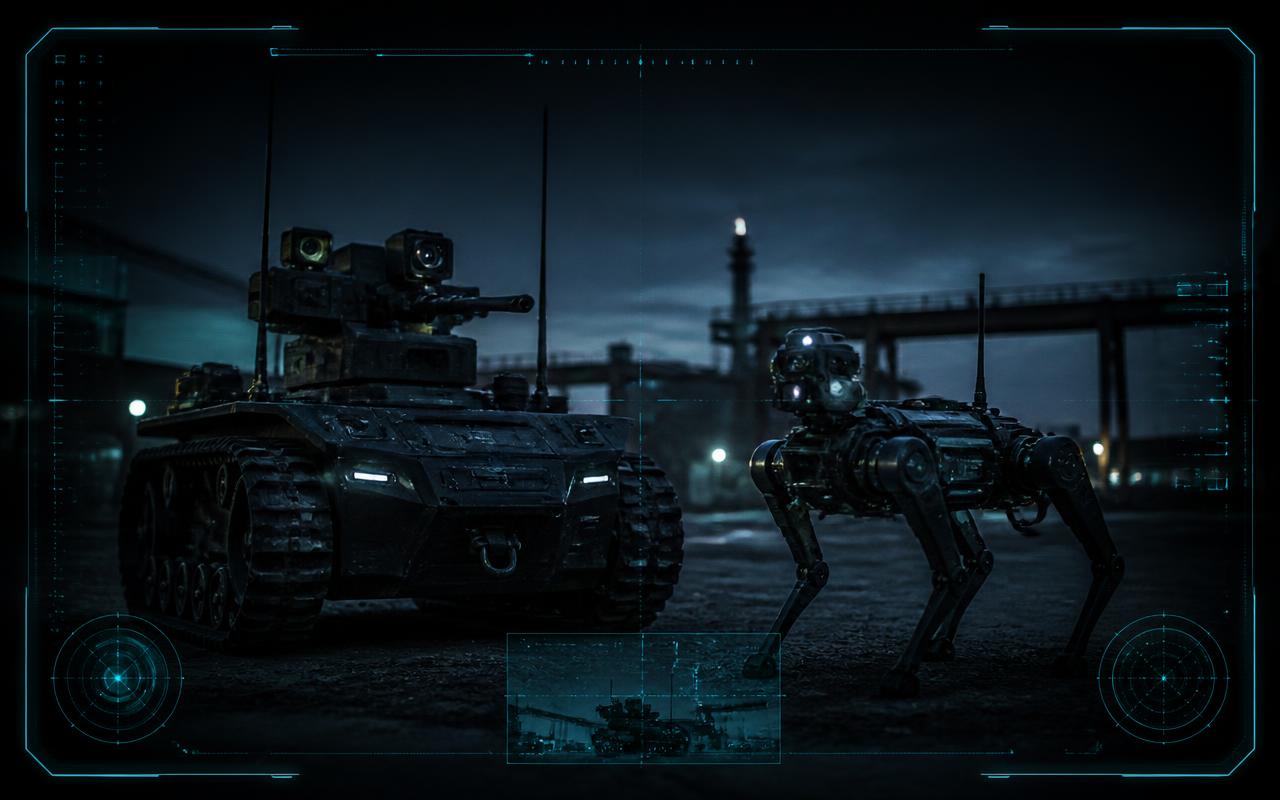
The suite ingests video and control data from drones, UGVs and robotic dogs at the edge, alongside MAVLink and ROS telemetry.
Tactical Control & Connectivity
Reliable Video and Control for Drones, UGVs and Robotic Dogs
Part of Tactical Control & Connectivity — also see NOMAD Tactical Robotic C2
Overview
Low-latency video, teleoperation and control for drones, UGVs and robotic dogs operating over RF, mesh, cellular and bandwidth-constrained tactical networks.
The Tactical Video & Teleoperation Suite delivers low-latency video and responsive control for drones, UGVs and robotic dogs over RF radios, tactical mesh, cellular and satellite-backed links. Bitrate, resolution and frame rate adapt continuously to measured link conditions and control traffic is prioritised over video, so the operator keeps working on a degraded link instead of losing the feed.
The Tactical Video & Teleoperation Suite keeps the operator connected to the platform when the network will not cooperate. It delivers low-latency video and responsive control for drones, UGVs and robotic dogs across RF radios, tactical mesh, cellular and satellite-backed links.
Transmission adapts continuously to measured link conditions: bitrate, resolution and frame rate move with available bandwidth, control traffic is prioritised over video, and the system stays usable on a degraded link instead of freezing and dropping.
The same suite carries telemetry and remote control for air and ground platforms through MAVLink and ROS, and feeds video and position into NOMAD so several operators can share one picture of the same mission.
Capabilities
How it works
From sensor input to actionable output in four steps.
The suite ingests video and control data from drones, UGVs and robotic dogs at the edge, alongside MAVLink and ROS telemetry.
It continuously measures available bandwidth and adjusts bitrate, resolution and frame rate so the stream stays usable as conditions change.
Control traffic is protected over video traffic, so the operator keeps command even when the link is heavily degraded.
Video, telemetry and target data feed into NOMAD and ATAK so multiple operators and command systems see the same mission picture.
Use cases
Typical situations this system is deployed in, and what it solves in each one.
Video and control hold up over radio, mesh and cellular links, so a drone or ground robot can be operated from beyond line of sight.
In cities and indoors the connection comes and goes. Control keeps priority over video, so the operator stays in command as bandwidth drops.
The operator stays out of the danger area and still gets low-delay video and precise control of the robot.
Video from remote observation posts and several platforms at once can be shared with more than one operator.
Integration
Built to drop into an existing architecture — standard interfaces, standard hardware, no forced replacement of fielded systems.
Related
A retrofit autonomy computer that upgrades existing ground robotic platforms with navigation, obstacle avoidance and autonomous mission behaviors.
A tactical C2I autonomy gateway that sits beneath an existing command system and connects mixed UAV, UGV and quadruped fleets.
FAQ
Plain-language answers for integrators, procurement teams and operators.
Tell us the platform, sensor and mission. We will walk you through integration options and arrange a technical demonstration.